How to Build a Flag Football Defense Your Players Understand
Oct 26, 2026
A flag football defense can look organized before the snap and fall apart seconds later. Two defenders follow the same receiver. Someone expects help that never arrives. A player hesitates, and a routine pass turns into a big gain.
The immediate reaction is often to demand more effort or call a different coverage. Before making that change, ask a simpler question: did every player understand their job?
Building a dependable defense starts with teaching assignments clearly enough that athletes can carry them out when the offense moves, routes cross, and decisions happen quickly. For youth coaches, that means spending time on understanding before expanding the playbook.
Start With a Base Defense You Can Teach Clearly
Your base defense should give players a familiar starting point. They need to know where to align, what their assignment is, and how that assignment connects to the teammates around them.
Choose an approach that fits your league rules and your athletes’ experience. A group learning defensive fundamentals needs instruction it can process and repeat during a game.
Walk through the alignment before adding live receivers. Ask each defender to explain their responsibility. Then change the offensive formation and check whether players can find their positions again.
Those conversations help you identify confusion early. A player standing in the correct spot may still misunderstand what happens after the snap.
Explain What Happens When Routes Enter and Leave an Area
Recognizing a coverage name is only the beginning. Players also need to understand how to respond to the routes they will see.
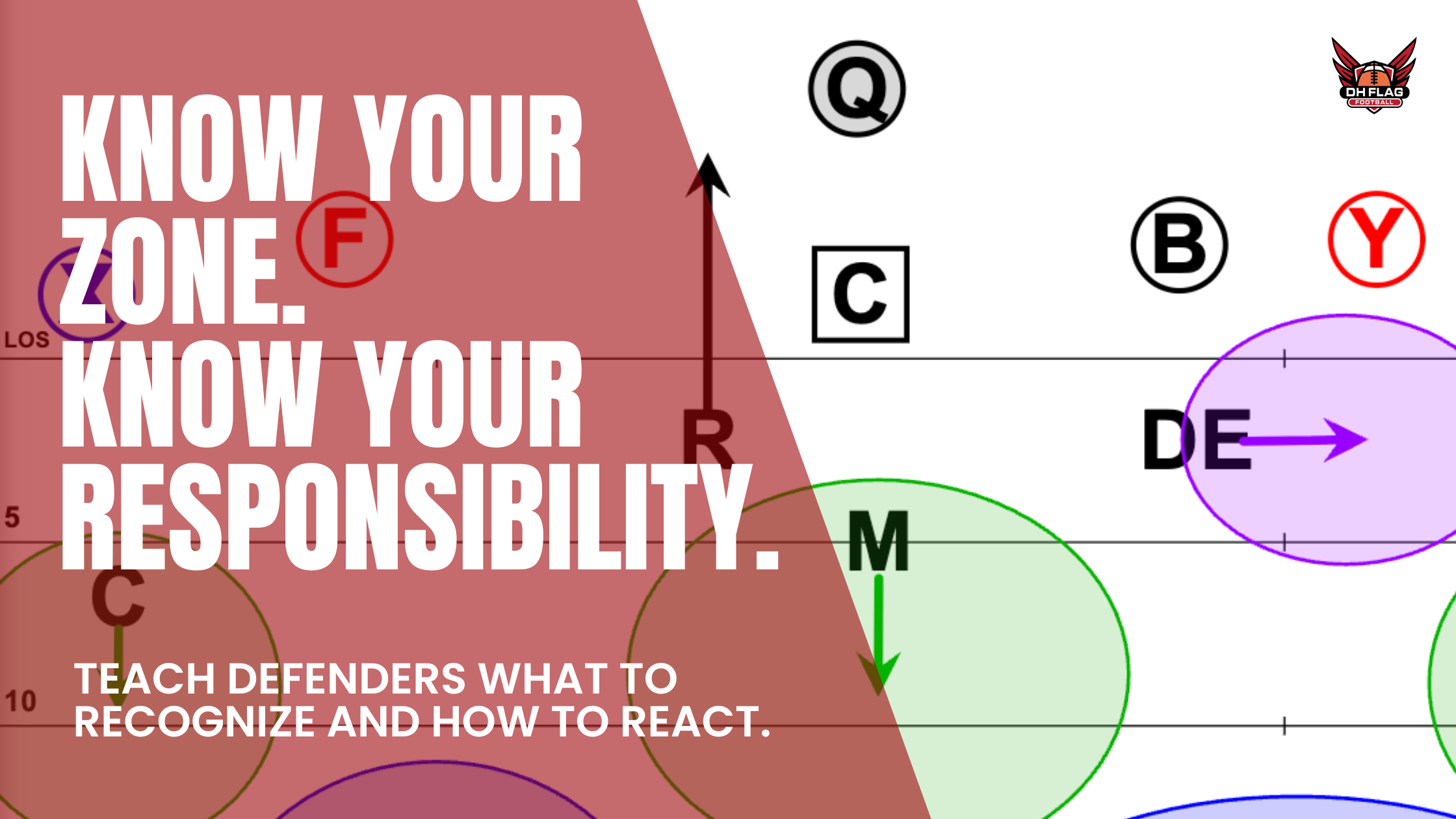
In zone coverage, for example, a defender needs more direction than “cover this area.” What should they notice as receivers approach? What does the coverage require when a route continues elsewhere? Where is their help?
The answers depend on the defense you teach, so make those rules explicit. Avoid assuming that players share your understanding of a diagram.
Use a small number of receivers during the teaching stage. Pause the repetition at the moment a decision becomes necessary, ask the defender what they see, and explain the appropriate response. Then repeat the situation at increasing speed.
Give Communication a Specific Job
“Talk more” is difficult instruction for a young athlete to follow. Give players something useful to communicate and make sure their teammates understand what it means.
Decide who confirms the defensive call, how players identify a formation change, and what language they use when an adjustment is needed. Keep the terminology consistent throughout practice.
Then rehearse communication as part of the repetition. Let the offense align, have the defense communicate, and check whether everyone received the same information before starting the play.
A loud defense can still be confused. The goal is shared understanding.
Teach Motion Adjustments Before You Need Them
Offensive movement tests whether defenders understand their responsibilities. Without a practiced response, players may chase motion unnecessarily, leave space unprotected, or wait for instructions while the ball is snapped.
Teach the response required by your chosen coverage. Explain who moves, who stays, and who communicates the change.
Begin with a walkthrough in which the offense shows one formation and sends one player in motion. Check the adjustment, reset, and repeat. Once the response becomes familiar, vary the starting formation.
This gives players experience recognizing the situation instead of trying to solve it for the first time during a drive.
Connect the Rush to the Coverage Behind It
Before teaching pressure, confirm your league’s rushing requirements. Starting distance, eligible rushers, blocking rules, and quarterback running restrictions can change how you organize the defense.
Explain the rusher’s job within the complete call. Help coverage players understand what they must protect while pressure develops, and teach everyone how the defense should respond if the quarterback moves.
Practice the entire sequence. Include repetitions where the quarterback releases the ball quickly and others where the play lasts longer. That helps defenders maintain their responsibilities beyond the first few seconds.
Correct the Breakdown You Actually See
When the offense completes a pass, identify what happened before changing the call.
An alignment error needs a different correction from a missed flag pull. A communication mistake needs a different response from a well-executed throw against sound coverage.
Ask players what they understood and compare that with what happened. If an assignment was unclear, reteach it. If the offense repeatedly creates a problem your current call does not address, consider a practiced adjustment.
That approach gives your next decision a purpose and helps athletes understand the correction.
Build Your Defensive Plan With the Lockdown Defense Edition
The Championship Playbook: Lockdown Defense Edition supports coaches in 5v5 and 7v7 with base alignments, coverage responsibilities, rush-and-contain instruction, and situational defensive guidance.
Coach Dakota’s video breakdowns explain the purpose and assignments behind the defensive plays, helping you prepare to teach them to your team.
If you want a resource to help organize your defensive approach and guide your preparation, explore the Lockdown Defense Edition.
GET THE LOCKDOWN DEFENSE PLAYBOOK
- Coach Dakota
Stay connected with news and updates from DH Flag Football!
Join our mailing list to receive the latest news and updates from our team.
Don't worry, your information will not be shared.
We hate SPAM. We will never sell your information, for any reason.