How to Choose the Right Flag Football Plays for Your Team
Oct 26, 2026
Choosing flag football plays can feel like the easiest part of coaching. There are diagrams everywhere, and almost every concept looks promising when the receivers are arrows and the defenders aren’t moving.
The harder part comes at practice. Players need to understand their assignments, the quarterback needs to know where to look, and the timing needs to hold up against a defense. A play that looks impressive on paper may ask more of your athletes than they can consistently execute.
For coaches building an offense, the starting point is understanding what your team can do today. From there, you can choose a manageable group of plays, teach them clearly, and develop answers for the situations your team will face.
Start With Your Players and Your League Rules
Before installing a play, check whether it fits the environment where your team competes. Player count, rushing rules, blocking restrictions, and quarterback running rules all affect what an offense can reasonably ask its athletes to do.
Then evaluate your personnel. Can your quarterback deliver an accurate short pass on time? Can your receivers maintain spacing through their routes? Do your athletes understand where to line up without repeated reminders?
Those answers should influence your selections. If your team is still learning basic alignments, adding complicated movement can create confusion before the ball is snapped. If your quarterback is developing arm strength, consistently asking for long throws across the field may limit the offense.
Choose plays that give your current players a realistic opportunity to succeed, then expand as their skills develop.
Give Every Play a Clear Purpose
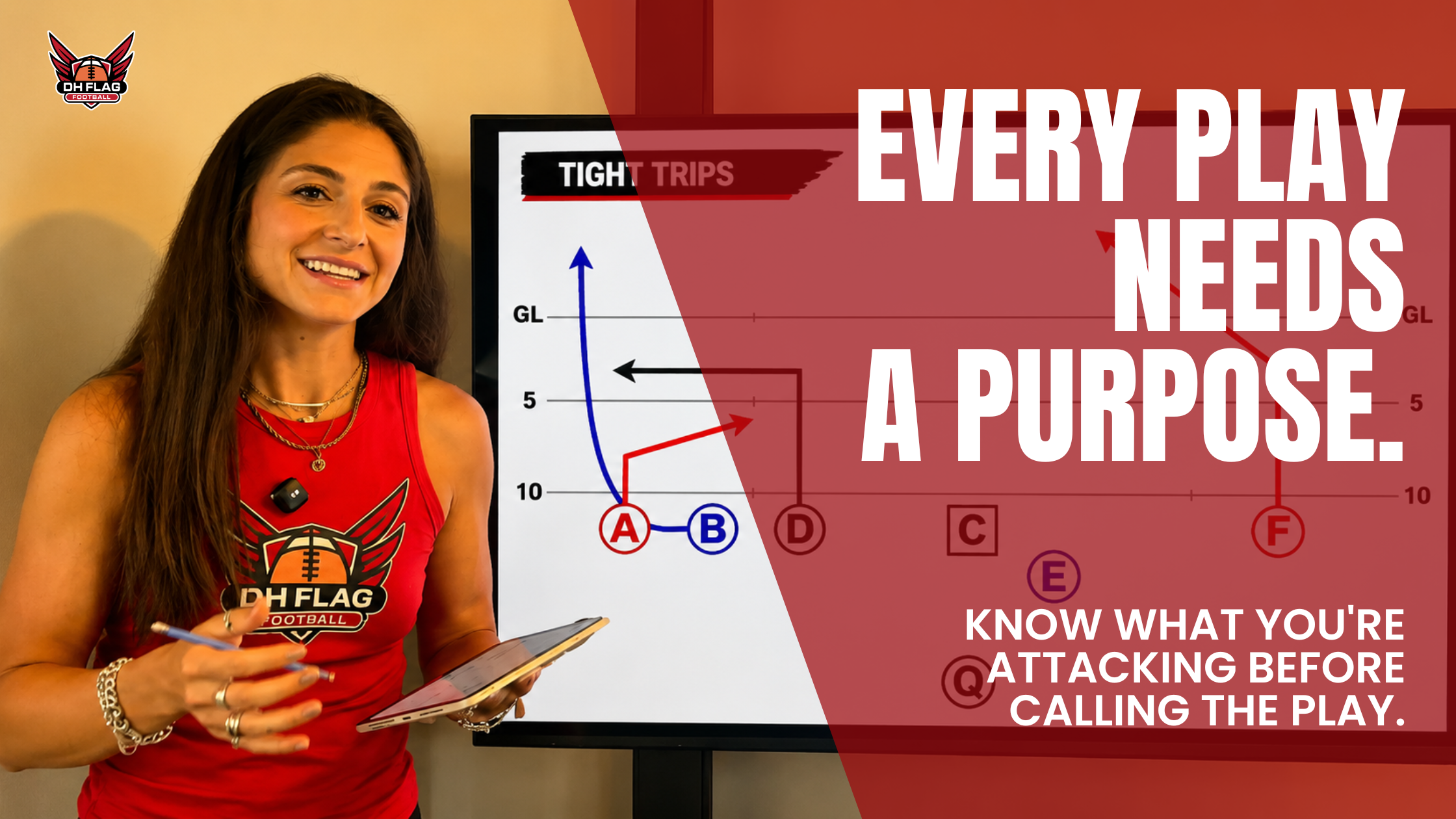
A useful question during preparation is: “Why would I call this?”
You should be able to explain what the play is designed to accomplish. Perhaps it gives the quarterback a quick completion, uses width to create space, or provides an answer when defenders protect a particular area.
That purpose also helps you teach. Receivers who understand how their routes work together can see why their spacing matters, even when they aren’t getting the ball. A quarterback who understands the intended opening has a clearer starting point than one simply told to find somebody open.
During practice, ask players to explain the concept back to you. Their answers can reveal misunderstandings that a clean-looking walkthrough might hide.
Teach the Quarterback What to Look For
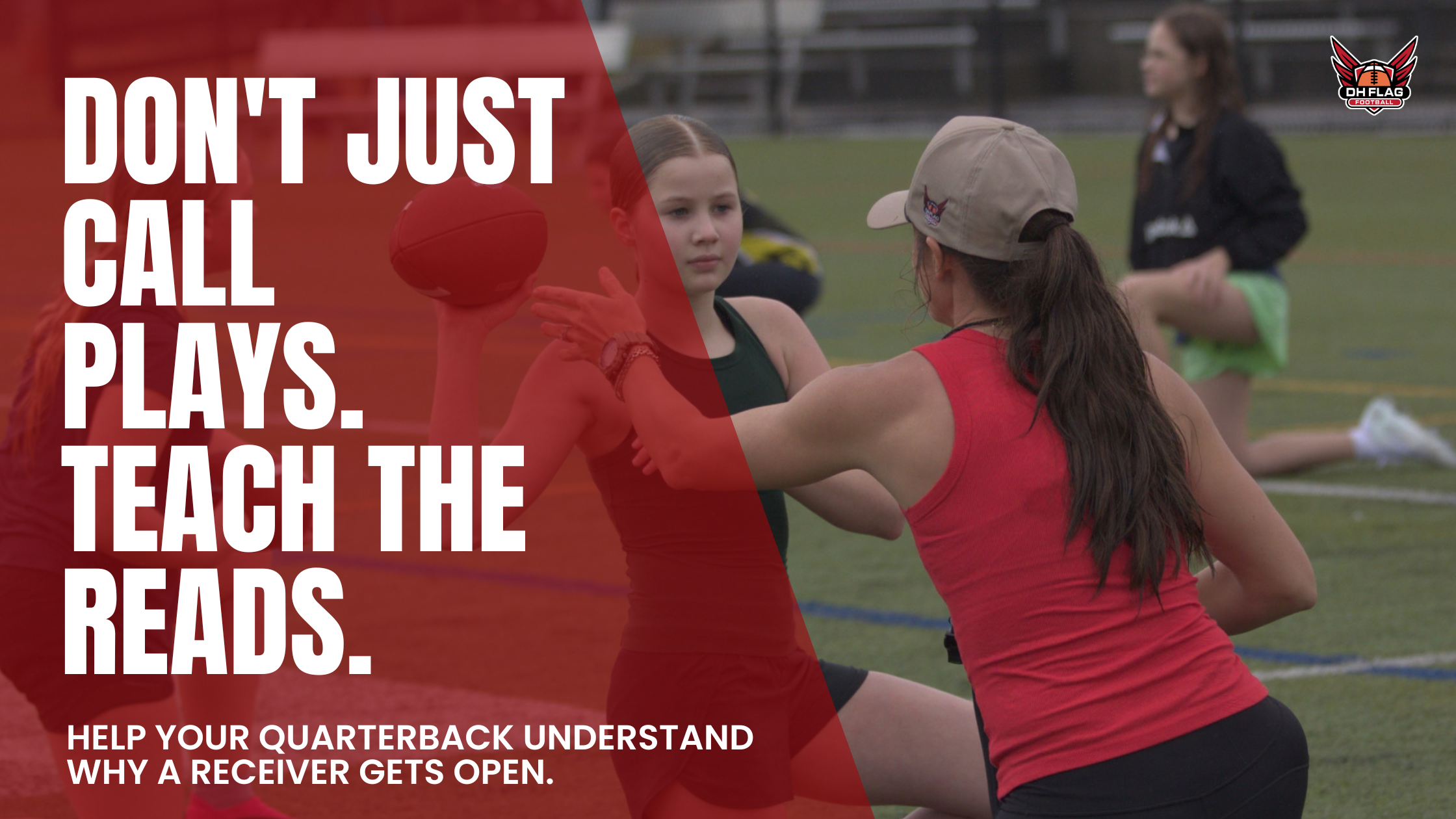
Telling a quarterback who to throw to leaves an important question unanswered: what happens when that receiver is covered?
Build instruction around the information the quarterback needs. Identify the relevant defender, explain what movement creates an opportunity, and teach the next decision if that opportunity disappears.
Keep the teaching appropriate to the athlete’s experience. A developing quarterback may need one clearly defined decision before being ready for a longer progression.
Practice should also include covered receivers. If every repetition ends with the intended target standing open, your quarterback gets little experience handling the moment when the defense takes that option away.
Practice Execution Before Adding Complexity
When a play breaks down, pause before replacing it. Find out what actually failed.
Was the alignment incorrect? Did two receivers arrive in the same space? Was the pass late? Did the quarterback misunderstand the decision?
Each problem calls for a different correction. Adding another play without resolving the underlying issue can carry the same mistake into a larger offense.
Use repeated practice opportunities to check whether players can execute without constant direction. Once they understand the concept, introduce a realistic defensive response and see whether that understanding holds up.
Organize Your Calls Before Game Day
A collection of plays becomes easier to use when you organize it around decisions you expect to face.
Think through situations such as needing a short gain, operating near the scoring area, or responding to pressure. Select practiced options for those moments and make them easy to find.
Your preparation should also account for what has happened during the game. If a concept struggles, distinguish an execution mistake from a defensive response that requires an adjustment. That gives you a reason for your next call.
Afterward, review which plays your athletes understood and where they needed help. Use that information to shape the next practice.
Build Your Offense With The Championship Playbook
The Championship Playbook provides 180 offensive plays: 60 each for 5v5, 6v6, and 7v7. It includes Coach Dakota’s video breakdowns and play-calling instruction, with concepts organized for new, developing, and experienced teams.
Use it to select a package that fits your athletes, understand the reasoning behind your calls, and develop your offense as your team progresses.
- Coach Dakota
Stay connected with news and updates from DH Flag Football!
Join our mailing list to receive the latest news and updates from our team.
Don't worry, your information will not be shared.
We hate SPAM. We will never sell your information, for any reason.